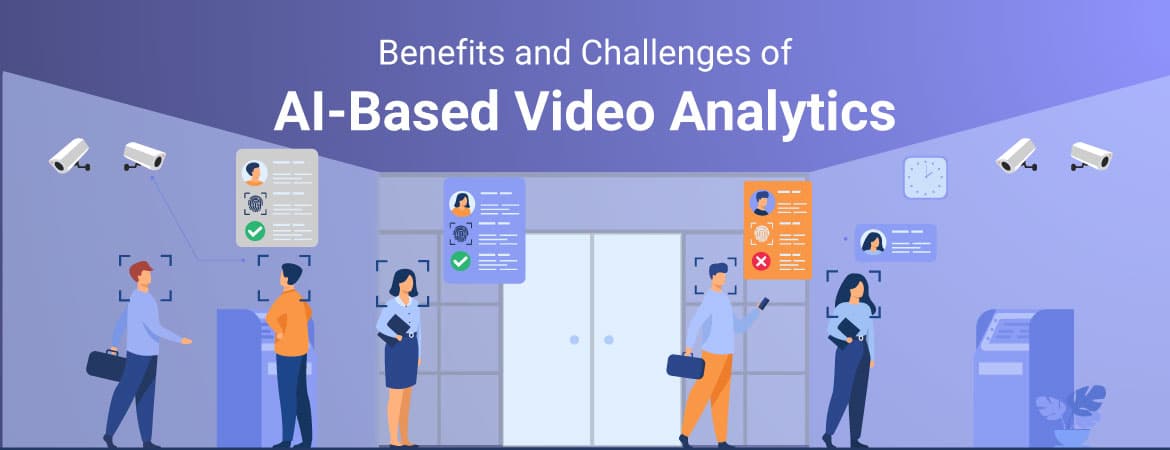
Scaling video analytics brings challenges like data drift, storage and tooling complexity. Here are the technologies and best practices that make it work.
Video analytics has become vital for businesses extracting insight from video data. As camera deployments proliferate across security, transport, healthcare and media platforms, scaling analytics introduces real challenges, including data drift, complex tooling and massive storage requirements that must be managed deliberately.
What Is Video Analytics?
Video analytics extracts meaningful insight from video using AI and machine learning. It rests on three core functions: detecting objects within frames, recognising known objects through classification, and tracking objects across multiple frames to understand trajectories and behaviours.
The Technology Behind It
- Video processing converts raw footage into analysable formats.
- Object detection uses AI models to identify and locate objects with bounding boxes.
- Object recognition identifies specific trained instances.
- Object tracking follows movement and behaviour across frames.
- Deep learning applies CNNs and RNNs trained on labelled datasets.
- Distributed computing uses cloud and edge resources for volume, built on a computer-vision foundation.
Best Practices Across Industries
- Security and surveillance: monitoring hundreds to thousands of cameras at once to detect threats and speed response.
- Transport monitoring: analysing traffic across entire networks, counting vehicles and detecting violations to ease congestion.
- Healthcare: monitoring patient areas across facilities to detect falls and emergencies and improve situational awareness.
- User-generated content: scanning massive video volumes for inappropriate material, copyrighted content and policy violations.
Challenges and Solutions
- Data drift is addressed through periodic model retraining and domain adaptation.
- Tool complexity is managed with automation and API-first architectures.
- Data storage is solved through compression and cloud storage strategies.
- Model training is improved using data augmentation and federated learning.
Conclusion
Organisations that implement large-scale video analytics gain unprecedented operational visibility. Those that overcome the scaling challenges of data drift, storage constraints and training difficulty unlock substantial benefits across industries.