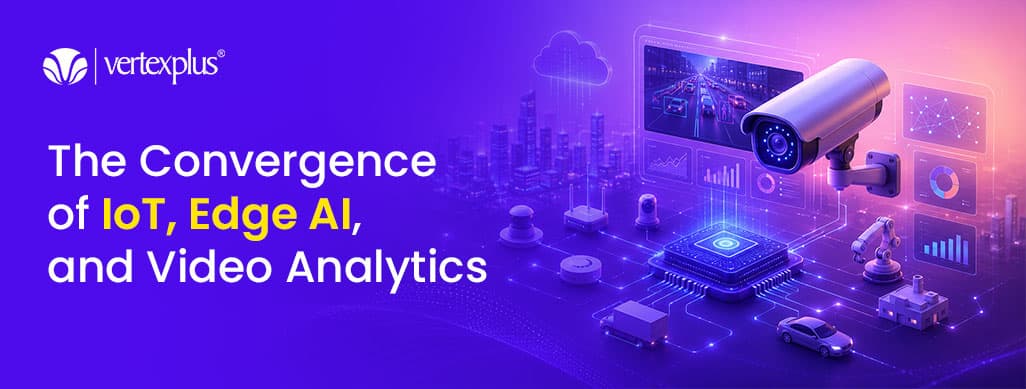
Connected cameras, sensors, and edge devices turn passive recording into actionable operational intelligence, where latency and reliability matter most.
Connected cameras, sensors, and edge devices are transforming enterprise monitoring. When IoT integrates with edge AI and video surveillance analytics, footage becomes actionable operational intelligence rather than passive recording. This shift matters most where latency and reliability are critical.
Why the old model struggles
Traditional video systems face delay, cloud expense, and bandwidth limits. Edge AI mitigates these by processing locally, while IoT adds contextual data from motion sensors, access controls, and environmental monitors. The video analytics market is projected to reach $13.67 billion in 2026 and $61.18 billion by 2035.
The technology stack
The system works in layers: IoT devices collect signals, edge AI analyzes them locally, and video analytics converts camera feeds into events and alerts. Local processing reduces response time and cloud dependency, while the cloud handles storage, model updates, and dashboards.
Business benefits
- Real-time decision making, instant incident detection and automated responses without cloud delay.
- Enhanced visibility, deeper insight into equipment, people, and environments.
- Cost efficiency, local processing minimizes bandwidth and storage expense.
- Security enhancement, intelligent cameras detect suspicious activity and trigger immediate alerts.
- Predictive maintenance, video plus machine telemetry catches equipment issues early.
- Scalable infrastructure, distributed deployments across manufacturing, healthcare, logistics, and smart cities.
Applications and rollout
Use cases include retail shelf monitoring with footfall data, manufacturing safety detection, logistics congestion alerts, and hospitality service-flow analysis. Successful rollouts begin with one high-value pilot site with measurable goals, and align stakeholders across operations, security, and IT to define data flow and escalation. More edge devices demand stronger security and updates, high data quality for model accuracy, and governance for retention, privacy, and model drift.
Conclusion
Organizations connecting IoT, edge AI, and video analytics achieve faster detection, reduced bandwidth usage, and improved situational awareness, enabling earlier response before problems escalate.