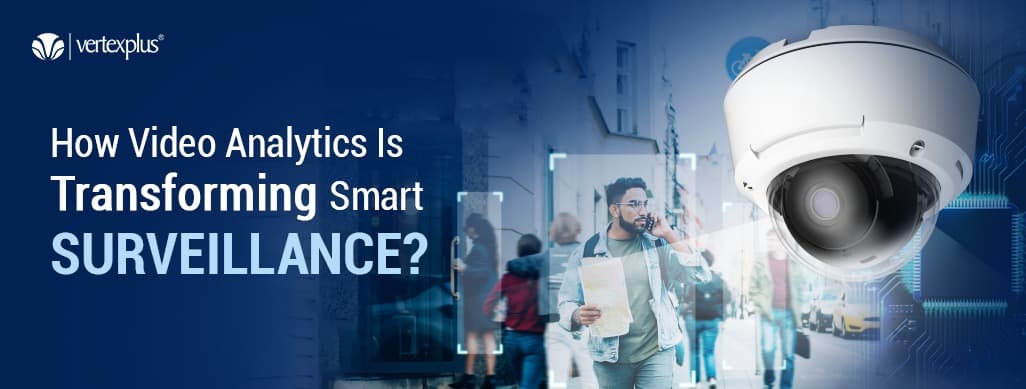
Modern surveillance turns camera footage into useful intelligence. See how AI-driven video analytics is reshaping security, retail, transport and smart cities.
Contemporary security transcends passive monitoring. Video analytics takes the pictures from cameras and turns them into useful information, enabling applications that range from stronger security to richer business intelligence across many industries.
What Is Video Analytics in Smart Surveillance?
Video analytics is the automated computer analysis of video footage to identify patterns and anomalies, in contrast to traditional manual surveillance. Modern systems leverage machine learning to recognize objects, faces, movements and behavioral patterns without a human watching every feed.
Important Technologies for Video Analytics
- Artificial intelligence and machine learning form the foundation and improve pattern recognition over time
- Computer vision facilitates object recognition, movement tracking and scene comprehension
- Data annotation labels footage to train AI models effectively
- Cloud computing and edge processing manage storage and processing at scale and proximity
- AI development creates customized solutions tailored to organizational requirements
How Video Analytics Is Used
- Public safety and security: surveillance, suspicious activity detection and facial recognition
- Retail: behavioral analysis, store optimization and theft reduction through movement heatmaps
- Transportation: traffic monitoring, accident detection and automated violation identification
- Healthcare: patient safety monitoring, restricted area surveillance and anomaly detection
- Smart cities and manufacturing: infrastructure management, quality control and safety compliance
Benefits and the Role of Data Annotation
Video analytics enables real-time threat detection, eliminates human monitoring fatigue and error, improves operational efficiency, reduces cost through automation and enhances decision-making. Accuracy depends on labeled training datasets, and the annotation process teaches systems to distinguish between entities, such as differentiating customers from staff in a retail environment. Custom AI development extends this to facial recognition, license plate recognition, behavioral analysis and crowd management.
Challenges and Future Trends
Implementation challenges include privacy concerns and regulatory compliance, substantial initial investment, integration complexity, false alarms and heavy data management demands. Looking forward, predictive analytics will forecast events rather than merely detect them, IoT integration will connect surveillance with device networks, facial recognition will grow more accurate, edge AI will reduce latency, and surveillance insights will increasingly drive business intelligence.
Conclusion
Video analytics transforms surveillance into intelligent, data-driven systems built on AI, machine learning and computer vision. With applications spanning security, retail and smart cities, and custom solutions enabled through data annotation and AI development, this evolving technology will play an ever-larger role in future surveillance infrastructure.