A practical look at data annotation types, techniques from manual to automated, the six-stage workflow, and use cases across healthcare, automotive and retail.
Data annotation is essential to the success of AI and machine learning, because just having data is not enough. Annotation is the critical process that enables models to function effectively by giving them accurately labeled examples to learn from. This guide explores annotation types, tools, techniques, emerging trends and real-world applications.
Types of Data Annotation
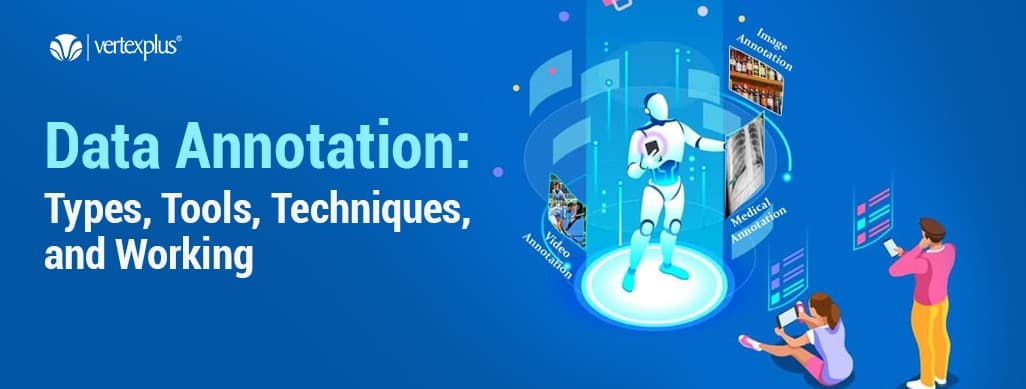
- Text annotation supports chatbots, search engines and sentiment analysis using named entity recognition, emotion detection and intent classification.
- Image annotation powers facial recognition, medical imaging and autonomous vehicles through bounding boxes, polygons and segmentation.
- Audio annotation enables voice assistants and speech recognition via speech-to-text, speaker identification and sound classification.
- Video annotation labels objects, movements and events across frames for security systems, sports analysis and smart cities.
Annotation Techniques
- Manual annotation, where people carefully label data themselves, suits complex tasks like medical imaging.
- Semi-automated annotation, where AI labels first and humans verify, balances speed with precision.
- Automated annotation, where computers label with minimal human input, is fast and cost-effective but requires quality checks for complex data.
How Data Annotation Works and Where It Is Used
The workflow typically runs through six stages: data collection, data preparation, annotation guidelines, annotation execution, quality assurance and data delivery. Modern tools accelerate this with AI-assisted labeling, quality assurance and collaborative features. Use cases span healthcare disease detection, automotive perception systems, retail product recognition, finance fraud detection and media content moderation.
Trends and Choosing a Service
Current trends include more AI-assisted annotation, growing demand for high-quality training data, multimodal annotation that combines formats, stronger data security and compliance focus, and adoption of managed annotation solutions. When selecting a service, prioritize experience with varied data types, robust quality assurance, strong privacy standards and scalability for projects of any size.
Conclusion
Quality labeled data drives AI and machine learning success. Companies that invest in accurate annotation strategies and professional services can build reliable AI systems that foster innovation and lasting competitive advantage.