How AI-powered video analytics, NOC integration and data annotation turn traditional hotel CCTV into a proactive, intelligent security ecosystem.
The hospitality industry is increasingly adopting intelligent monitoring systems that transform security from a reactive function into a data-driven one. Hotels are implementing video surveillance analytics software alongside data annotation services and Network Operation Centers to build proactive security ecosystems that protect guests, staff and property around the clock.
What Is Video Surveillance Analytics Software?
Video surveillance analytics software uses AI to analyze camera feeds in real time, detecting patterns and anomalies as they happen. Unlike traditional CCTV that simply records footage for later review, these solutions deliver actionable insights and automated alerts. Modern hotels need this because they face high guest turnover, open public spaces, multiple access points and continuous, round-the-clock operations that make manual monitoring impractical.
How It Works and Its Key Features
- Video capture across the entire premises feeds footage into the system.
- AI processing applies machine learning algorithms to interpret each frame.
- Event detection flags suspicious activity such as loitering or unauthorized access.
- An alert system sends instant notifications to security teams.
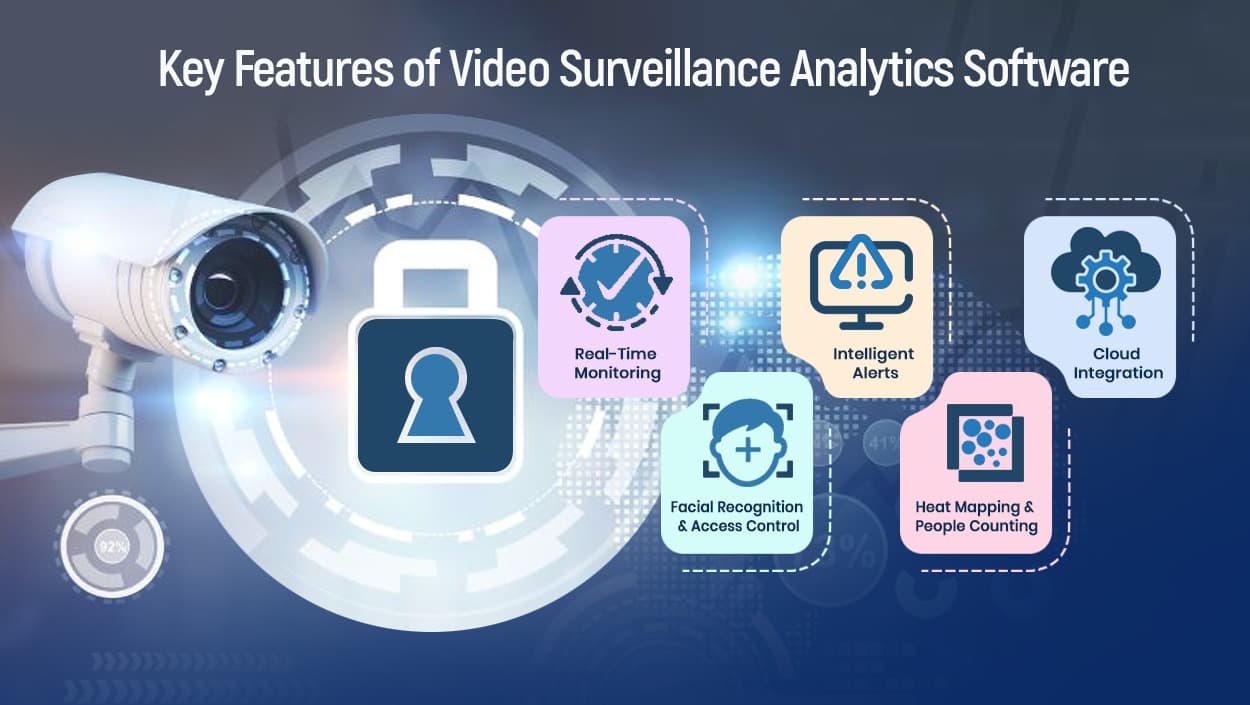
- Core features include real-time monitoring of multiple feeds, facial recognition and access control, heat mapping, people counting and cloud integration for remote access.
The Role of NOC and Data Annotation
A Network Operation Center acts as the central hub for monitoring surveillance across multiple properties, enabling unified control, faster incident response and real-time system health monitoring. Data annotation services underpin accuracy by labeling video information to train AI models to recognize objects, actions and patterns. Well-annotated data reduces false alerts, improves reliability and lets systems adapt to hotel-specific scenarios such as lobbies, corridors, parking areas and event spaces.
Benefits and Future Trends
- Enhanced guest safety through continuous monitoring and faster incident response.
- Crime prevention via visible deterrence and early detection.
- Operational efficiency and cost reduction through automation.
- Liability protection backed by recorded evidence.
- Emerging trends include predictive security, edge computing near cameras, advanced facial recognition and integration with IoT and smart devices.
Conclusion
Adopting video surveillance analytics software has become essential for modern hotels. By combining AI video analytics, NOC integration and reliable data annotation services, properties can build secure, efficient and intelligent environments that strengthen security, streamline operations and elevate the overall guest experience.