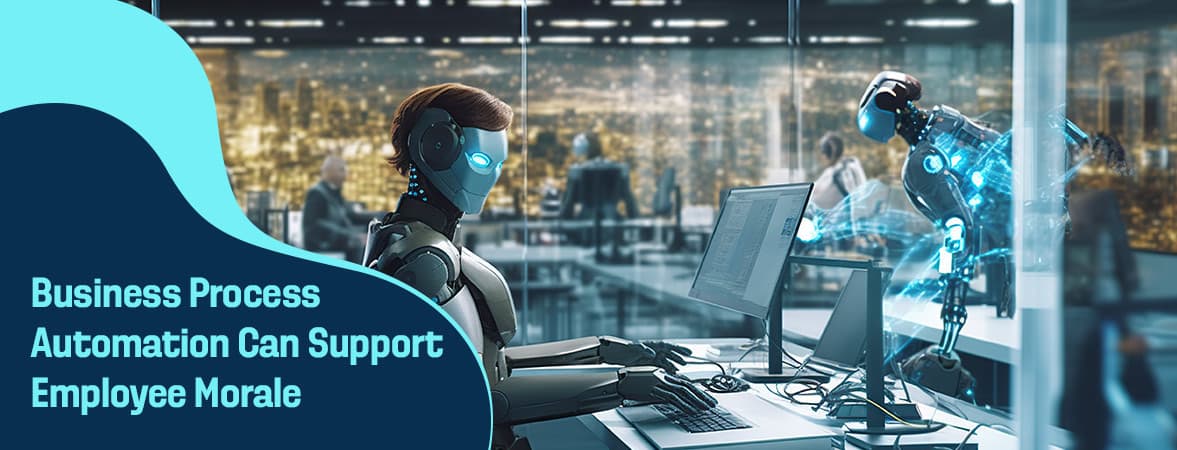
Automation is not just about efficiency, it can meaningfully improve employee morale. Here are five ways BPA supports a happier, more engaged workforce.
Employee satisfaction and morale are critical factors that impact recruitment, retention, and overall productivity. While automation primarily targets efficiency gains, it also significantly influences the worker experience. When thoughtfully implemented, these technologies can boost morale by streamlining workflows and allowing staff to dedicate time to more meaningful work.
What is Business Process Automation?
Business process automation (BPA) is the use of software, robotics, and other technologies to handle repetitive tasks, workflows, and routine processes that were previously done manually. Common examples include data entry, invoice processing, form filling, and customer service queries. Beyond efficiency, BPA improves accuracy and compliance while freeing employees for strategic work. Adoption is widespread across banking, insurance, and healthcare, often powered by tools like RPA and OCR.
Five Ways BPA Supports Employee Morale
- Reducing mundane, repetitive tasks so employees can pursue problem-solving, analytics, customer service, and strategic thinking
- Providing flexible work options, since process robots operating continuously enable distributed and flexible scheduling
- Simplifying customer service by letting chatbots and virtual agents handle routine inquiries while staff address complex issues requiring empathy
- Making software more user-friendly through virtual agents that manage routine requests
- Automating compliance by handling data gathering and regulatory monitoring, reducing the administrative burden on teams
How to Decide Which Processes to Automate
Good candidates for automation tend to be repetitive, well-defined, error-prone, labor-intensive, or paperwork-heavy. Look for bottlenecks, standardizable tasks, and mid-value activities with measurable impact that align with strategic goals. Prioritizing these processes maximizes both efficiency and the morale benefits automation can deliver.
Conclusion
Automation empowers employees to concentrate on more engaging and challenging work that leverages their skills. When the human impact receives genuine consideration, BPA becomes an important driver for positively influencing workplace culture and morale, not merely a business optimization strategy.