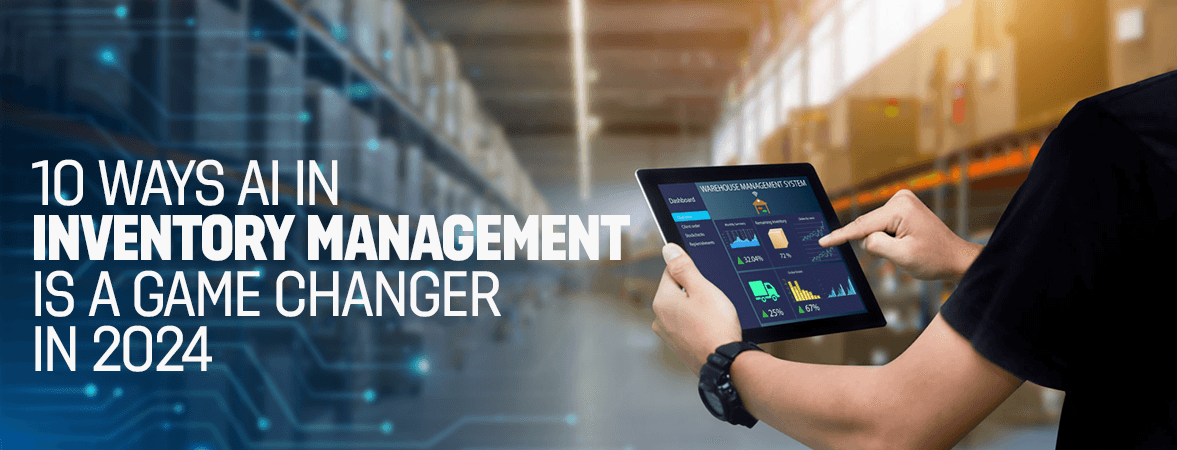
From real-time tracking to demand forecasting, AI is removing traditional bottlenecks and reshaping how companies manage inventory and the supply chain.
Artificial intelligence is serving as a game changer for inventory management operations. From tracking to forecasting, AI enables companies to enhance supply-chain performance through capabilities such as real-time monitoring, demand prediction, and automated workflows, analyzing vast data sources to reveal demand and supply patterns that were previously hidden.
10 Ways AI Revolutionizes Inventory Management
- Real-time inventory management that monitors sales and stock across locations for instant reordering and reallocation.
- Risk management using predictive modeling to anticipate demand swings, supply delays, and seasonal variation.
- Easier demand forecasting from historical sales, demographics, trends, and external factors.
- Smarter warehouse operations with machine-vision robots that sort and pick orders precisely.
- Data mining that surfaces purchase behaviors and demand drivers from internal and external sources.
- Increased trust and transparency through objective, traceable decision-making.
- Predictive maintenance that flags equipment failure patterns before breakdowns occur.
- Supplier relationship management that tracks delivery timelines, fill rates, and contract compliance.
- Dynamic pricing strategies driven by real-time market analysis.
- Order optimization that routes orders to the best distribution centers by inventory, timeline, and cost.
Challenges and How to Overcome Them
Key obstacles include implementation complexity, data-accuracy concerns, cybersecurity risks, and budget constraints. Practical solutions involve hiring specialized consultants, establishing strong data-governance protocols, adopting security best practices, and exploring cost-effective deployment options that fit the organization’s scale.
The Future of AI in Inventory Management
Anticipated developments include wider IoT sensor deployment, more advanced predictive techniques, augmented-reality applications for counting and damage detection, autonomous logistics vehicles, hyper-personalized recommendations, and AI-driven sustainability initiatives that reduce waste across the chain.
Conclusion
AI has proven transformative for inventory management, removing traditional bottlenecks and enabling smarter, faster operations. As supply chains continue to advance, inventory managers should expect AI to become increasingly central to optimization, making such investments a strategically necessary move for competitive advantage.